English
 français
 Deutsch
 русский
 español
 português
 العربية
 Melayu
 ไทย
 Indonesia
 हिंदी



An aluminum folding door profile is the extruded metal frame that forms the structural skeleton of each door panel. Hinges join the panels at their edges, and rollers carry them along a track. The panels fold back on themselves as they slide, so a wide opening collapses into a small stack. The aluminum resists twisting, and this strength lets large sections fold into a compact format without sagging. Readers who want the full picture will find the parts, the folding motion, the main types, the benefits, and the selection factors explained in the sections below.
Key Takeaways
- An aluminum folding door profile is the metal frame that forms each door panel.
- Hinges connect the panels, and rollers on a track let the panels fold and stack neatly.
- Top-hung systems carry weight on a header track, and bottom-rolling systems use a floor track.
- Thermal breaks in the profile reduce heat transfer and improve insulation.
- Match the profile strength to the door size and weight for smooth operation.
Aluminum Folding Door Profile Components
Core Profile Parts
The aluminum folding door profile is the extruded aluminum frame that forms the structural skeleton of each panel. A torsion-resistant profile resists twisting along its length. This stiffness allows large door sections to fold into a compact format without sagging or binding at the joints. Manufacturers extrude the profile in long runs, then cut it to the exact panel size. Wall thickness and internal rib design determine how much load a profile carries, so heavier panels call for deeper sections and thicker walls. Buyers who want a warm, decorative finish often select an anodized champagne color aluminum profile, which adds surface hardness along with its tone.
These bi-fold door frames also carry the hardware that ties the system together. The profile includes machined channels and fixing points for rollers, guides, and hinges. Good bi-fold door materials keep the frame straight over years of use, and straight frames keep the panels aligned. A warped or undersized profile shows up quickly as rubbing panels and a stiff folding action.
Tracks, Hinges, and Rollers
Tracks, hinges, and rollers connect the panels and guide their movement. The top track mounts to the header and carries the weight in a top-hung system. Each hinge joins two panels at their vertical edges and acts as the pivot point for folding. Rollers sit in the track and let the leading panel travel smoothly. Quality bi-fold door hardware uses sealed bearings and adjustable carriages, so homeowners can correct minor misalignment with a screwdriver.
The bottom guide keeps the panels vertical, and the threshold sits at floor level beneath the opening. A low-profile threshold reduces the trip hazard and improves accessibility. Simple checks help DIY readers spot problems: listen for grinding at the rollers, look for gaps at the hinge line, and confirm the panels hang plumb. These small inspections catch wear before it strains the frames.
How Aluminum Bi-Fold Doors Fold and Stack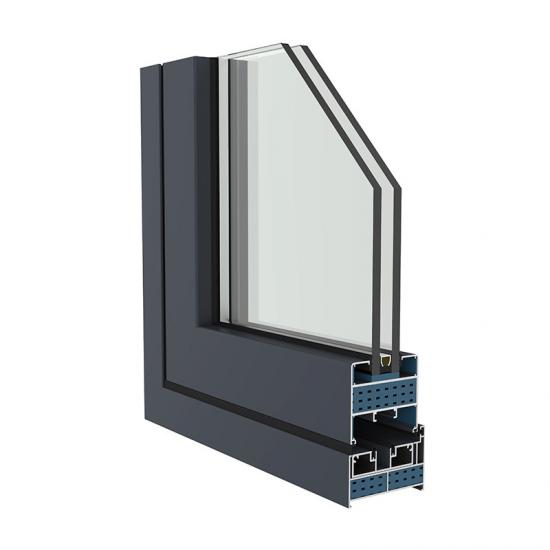
The Folding Motion
Two or more leaves hinge to each other at their vertical edges, and this connection turns a wide wall of glass into a compact stack. Each pair acts like a book cover. The hinge line becomes the spine, and the leaves swing together as the door moves. A user pulls the handle, the lead leaf travels, and every linked section follows in sequence. The folding panels gather at one end of the opening instead of swinging into the room. This motion separates aluminum bi-fold doors from hinged doors, which need clear floor space to sweep through an arc.
Configuration shapes the motion. In a single-side layout, all leaves fold toward one jamb and stack there. A split layout divides the leaves into two groups that meet at the center and fold toward opposite jambs. The split bifold suits wide spans because each half travels a shorter distance. A central-passage layout leaves a clear route in the middle. The choice depends on traffic flow, furniture placement, and the width of the wall.
How the Track Guides Panels
The track defines the path, and the rollers follow it. A top-hung folding system carries the leaf weight on a header track, and the bottom guide only keeps the leaves vertical. Bottom-rolling doors reverse the load path and put the weight on a floor track. Either way, the track keeps every leaf on a straight line as the stack compresses.
Track geometry matters at the stack end. The lead leaf runs on a pivot or a trolley, and the trailing leaves slide along the same channel. A well-aligned track lets the stack close with light hand pressure. A track that sits out of level forces the rollers to fight the frame, and the leaves bind. Installers check level along the full run before they hang the sashes.
Aluminum bi-fold doors rely on this guided path for smooth daily use. The aluminum frame stays straight under load, so the rollers track true. Homeowners who hear a scrape or feel a stiff spot should inspect the track first. Debris in the channel and a loose guide are common causes. Cleaning the track and tightening the guide often restores easy movement.
The stacking depth sets the clear width. Panels fold flat against one another, and the panels stack into a fraction of the total span. Designers plan the pocket or the jamb clearance around that stack. Aluminum bi-fold doors therefore deliver a wide clear span without the swing clearance that hinged doors demand.
Hardware choice shapes the folding action. A quality aluminum folding door profile includes machined channels that hold the rollers in line. Buyers should confirm the profile matches the leaf weight before they order. Light leaves suit slim sections, and heavy leaves need deeper extrusions. Aluminum bi-fold doors built on matched components fold with less effort and last longer. The aluminum grade also affects stiffness, and a stronger alloy resists deflection at the hinge line.
Track layout decides how the leaves stack. A single-side run suits a corner, and a split bi-fold run suits a central entrance. Modern homes often pair aluminum bi-fold doors with a flush threshold for step-free access. Each layout keeps the folding action predictable, and users learn the sequence after a few uses. The next section covers the profile types that support these layouts.
Types of Aluminum Folding (Bifold) Doors
Top-Hung vs. Bottom-Rolling Bi-Fold Profiles
Top-hung and bottom-rolling systems differ in where the weight sits. A top-hung bi-fold carries every leaf on a header track, and the floor stays clear. This layout suits large glazed openings, because the header takes the load and the threshold remains flush. A bottom-rolling bi-fold puts the weight on a floor track instead. The floor track handles heavy leaves well, yet it interrupts the threshold line and collects grit over time.
Each design fits a different setting. Homeowners who want step-free access usually prefer the top-hung version. Installers who work with very wide spans often choose bottom-rolling hardware for its load capacity. Both layouts rely on straight extrusions, and both reward careful leveling at installation. A profile that twists under load will bind in either system, so section depth should match leaf weight.Beyond architectural applications, aluminum extrusions are also widely used in industrial and electrical applications due to their versatile material properties. In particular, good electrical conductivity aluminum profiles are suitable for applications requiring efficient electrical transmission, while offering the benefits of lightweight construction, corrosion resistance, and ease of fabrication. Selecting the appropriate aluminum alloy is essential to achieving the required balance between electrical conductivity and mechanical strength.
Standard vs. Thermal-Break Profiles
A thermal break is a plastic section that separates the aluminum frame into two pieces. This insert creates an insulating barrier between the interior and exterior metal surfaces. Heat travels poorly across the plastic, so the inner face stays closer to room temperature. Thermally broken frames therefore reduce condensation on cold days and hold interior warmth more effectively.
Heavy-duty aluminum folding doors combine this barrier with multi-chamber extrusions and sealing gaskets. The result is solid thermal insulation and sealing performance for heat insulation and moisture resistance. Paired with low-e insulated glass, a well-built system keeps rooms comfortable in both summer and winter. Buyers comparing catalogs should check the break width and the gasket count, since these details separate ordinary profiles from high-performance ones. Modern fireproof aluminium folding doors also build on thermally broken designs, and reputable extruders such as Guang Ya aluminium supply profiles for these demanding applications.
Benefits and Limitations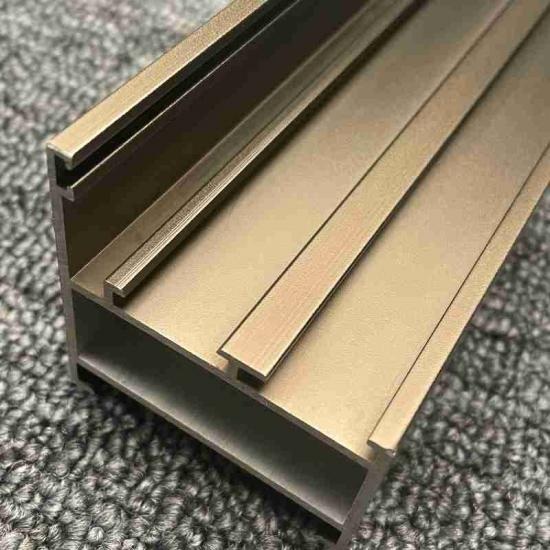
Where Aluminum Folding Doors Perform Best
The clearest advantage is space. Aluminum bi-fold doors clear the full span of a wall, and the leaves gather into a narrow stack at one end. A homeowner gains the widest possible opening without the swing clearance a hinged door needs. The panels fold flat against one another, so the stack stays tidy. The stack depth stays small relative to the span, and furniture can sit close to the jamb. A corner layout works well here, because the stack tucks against the side wall.
Thermal performance has improved sharply. Quality aluminum folding door systems reach U-values as low as 1.2 when paired with low-e insulated glass and warm-edge spacers. Thermally broken frames carry that rating across the whole assembly. Manufacturers also build sashes up to 2.5m wide and 1.2m high, so one run covers a large wall with few interruptions. Sealing gaskets at every hinge line keep drafts and rain outside. A well-sealed bi-fold holds heat in winter and keeps cooled air inside during summer.
Limits to Keep in Mind
Every door type has a fit. Aluminum bi-fold doors carry more hardware than a simple slider, and that hardware needs periodic adjustment. Rollers wear, hinges loosen, and tracks collect grit. A bottom-rolling bi-fold also interrupts the threshold, which matters for step-free access. A top-hung bi-fold avoids that issue, yet it needs a strong header to carry the load. Aluminum folding (bifold) doors also need a level track, and an out-of-level floor strains the guides.
Cost is another factor. A folding system with thermal breaks and quality hardware costs more than a basic slider of the same span. Very wide openings also demand deeper profiles and stronger headers, and those add weight. Aluminum bi-fold doors suit homeowners who value a wide clear opening and accept the maintenance routine. A sliding door suits a smaller budget and a simpler mechanism. A bi-fold with a split layout spreads the load across two stacks. Neither choice is wrong; the space decides.
How to Choose the Right Profile
Aluminum Sliding vs. Folding Doors
The comparison between aluminum sliding vs. folding doors starts with how each system uses space. A sliding panel travels along its own track and parks behind a fixed pane. It needs no stacking pocket and no swing clearance. A folding system gathers several leaves into a compact stack at the jamb. That stack delivers a wider clear opening, yet it occupies wall or pocket space at the end of the run.
Each layout fits a different room. A sliding door suits a modest opening where a simple mechanism and a lower budget matter most. A multi-slide layout links several panels for a broader span, and the panels glide past one another with little effort. A bi-fold suits a wall that should disappear entirely on mild days. Homeowners who want the largest possible opening usually lean toward a bi-fold, while those who value a quiet, simple glide often prefer a slider.
Matching Profile to Door Size and Use
Profile strength should match leaf size and weight. Tall, wide leaves need deeper sections and thicker walls, because a slim extrusion deflects under load. A light leaf on an oversized profile wastes material, and a heavy leaf on a slim profile binds at the hinge line. Buyers should confirm the manufacturer's rated leaf dimensions before ordering, and they should check that the hardware matches the same rating.
Thermal performance deserves a close look. A thermal break separates the inner and outer aluminum faces, and gaskets at every joint complete the barrier. Buyers should count the gasket lines and inspect the break width. Good sealing and installation decide whether the assembly performs as rated, so the fitter matters as much as the profile. Hardware quality rounds out the checklist: sealed bearings, adjustable carriages, and a level track keep the panels moving smoothly for years.
An aluminum folding door profile is the extruded frame that shapes each panel. Hinges link the panels, rollers ride the track, and the leaves fold into a compact stack. That stack clears a wide opening with little lost wall space. Aluminum resists twisting, so folding doors stay aligned over years of use. A bi-fold system also seals and insulates well when the frame carries a thermal break. Buyers should match profile depth to leaf weight, confirm the break, and check hardware. A bi-fold rewards that care with smooth daily movement. Homeowners can measure their wall and choose a profile that fits. Guang Ya aluminium supplies quality profiles.
FAQ
Do aluminum folding door profiles need much maintenance?
They need little routine care. Owners should clean the track, check the rollers, and tighten the guides a few times a year. Grit in the channel causes most stiffness. A quick wipe and a light adjustment keep the panels gliding smoothly.
Can a bi-fold system fit a small opening?
Yes, though the gain is modest. A bi-fold shines on wide walls, where the leaves stack into a narrow pile. On a small opening, a slider often serves better. Owners should weigh the clear span they want against the stack space they can spare.
How do owners know a profile suits their climate?
They should check the thermal break and the gasket count. A broken frame with sealed joints holds interior comfort in both hot and cold seasons. Buyers in fire-sensitive zones can also review modern fireproof aluminium folding doors, which build on the same thermally broken designs.
What causes panels to bind after installation?
Binding usually traces to an out-of-level track or a loose guide. The frame may also sit undersized for the leaf weight. Owners should inspect the track first, then confirm the profile rating. Correcting alignment restores easy movement in most cases.
Do folding doors save energy compared with fixed glazing?
They can perform well when built and fitted with care. Quality systems reach U-values as low as 1.2 with low-e glass. Sealing and installation decide the real result, so the fitter matters as much as the profile itself.
 IPv6-Netzwerk unterstützt