English
  français
  Deutsch
  русский
  español
  português
  العربية
  Melayu
  ไทย
ไทย  Indonesia
  हिंदी
हिंदी 



Sie können ein Hochpräzisions-Fluorcarbon-Aluminiumprofil für Fenster Achten Sie auf saubere Schnitte. Prüfen Sie das Gewicht. Die Oberfläche sollte sich glatt anfühlen. Die Farbe sollte überall gleichmäßig sein. Achten Sie auf eine Eloxierung des Profils. Fordern Sie Leistungsdatenblätter von den Lieferanten an. Berücksichtigen Sie bei der Auswahl der Profile die Anforderungen an Ihre Fenster hinsichtlich Einsatzort und -art. Gute Profile sollten keine Mängel aufweisen. Sie benötigen eine hohe Wandstärke. Die Oberfläche sollte gleichmäßig und einheitlich sein. Die folgende Tabelle listet gängige Qualitätsmerkmale für Fensterprofile auf:
|
Qualitätsindikator |
Beschreibung |
|---|---|
|
Aussehensqualität |
Glatte, saubere Oberfläche ohne Mängel |
|
Wandstärke |
Mindestens 1,4 mm dick für Außenfensterprofile |
|
Filmdicke |
Entspricht den Anodisierungsnormen wie AA10, AA15, AA20, AA25 |
|
Chemische Zusammensetzung und Eigenschaften |
Technische Regeln müssen befolgt werden. |
|
Farbunterschied |
Gleiche Farbe für schöne Fenster |
|
Korrosions- und Abriebfestigkeit |
Sorgt dafür, dass Fenster länger halten und stabil bleiben. |
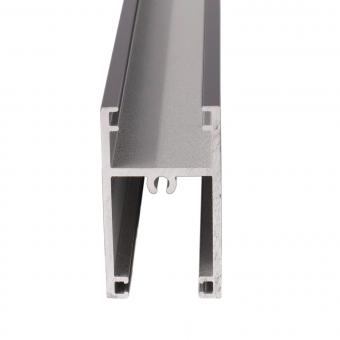
Bei der Auswahl von Aluminium-Fensterprofilen sollten Sie Aussehen und Funktion Ihrer Fenster berücksichtigen. Jeder Fenstertyp hat unterschiedliche Anforderungen. Schiebefenster, Dreh-Kipp-Fenster und Festverglasungen verwenden Aluminium-Fensterprofile jeweils auf ihre eigene Weise. Wichtig ist, dass Ihre Fenster luftdicht sind. Das sorgt für ein angenehmes Raumklima und spart Energie. Luftdichte Fenster verhindern außerdem das Eindringen von Staub und Lärm.
Hochleistungsfähige, fluorcarbonbeschichtete Aluminiumprofile Sie bieten viele Vorteile für die Fenstergestaltung. Sie sind in zahlreichen Farben und Oberflächen erhältlich, sodass Sie das Passende auswählen können. Diese Profile verleihen Ihren Fenstern ein gepflegtes und modernes Aussehen. Zudem sind sie rost- und oxidationsbeständig, sodass Ihre Fenster lange schön bleiben. Die folgende Tabelle listet einige wichtige Merkmale auf:
|
Besonderheit |
Beschreibung |
|---|---|
|
Korrosionsbeständigkeit |
Ausgezeichnete Beständigkeit gegen Korrosion und Witterungseinflüsse, wodurch es für verschiedene Umgebungen geeignet ist. |
|
UV-Beständigkeit |
Schützt vor starker ultravioletter Strahlung und verhindert so Ausbleichen und Verfärbung. |
|
Haltbarkeit |
Gewährleistet langfristige Leistungsfähigkeit ohne Verblassen oder Ausbleichen und sorgt so für Langlebigkeit. |
Sie sollten prüfen, wie das Wasser aus dem Fenster abläuft. Hochwertige Aluminiumfensterprofile verfügen über eine verdeckte oder versenkte Wasserablaufführung. Diese Konstruktionen verhindern das Eindringen von Wasser und halten den Rahmen trocken. Eine gute Entwässerung und Abdichtung schützen Ihr Fenster vor Undichtigkeiten und Beschädigungen.
Überlegen Sie sich gut, wo Sie Ihr Fenster einbauen möchten. Aluminium-Fensterprofile müssen unterschiedlichen Gewichten und Witterungseinflüssen standhalten. In Küstennähe kann salzhaltige Luft Lochfraßkorrosion verursachen. In Städten können beispielsweise Schwefeldioxid die Oberfläche angreifen. Sehr hohe oder niedrige pH-Werte können die Oxidschicht der Aluminium-Fensterprofile beschädigen.
Die folgende Tabelle listet die wichtigsten Umweltfaktoren auf:
|
Umweltfaktor |
Überlegungen |
|---|---|
|
Anwendungsszenario |
Wohn-, Gewerbe- oder Hochhausbauten; Küsten- oder Kaltklimazonen berücksichtigen. |
|
Korrosionsbeständigkeit |
Wählen Sie die Produkte anhand ihrer Eignung für hohe Salzkonzentrationen oder extreme pH-Werte aus. |
|
Thermische Leistung |
Ermitteln Sie den Bedarf an thermischer Optimierung anhand der lokalen Klimabedingungen. |
Wählen Sie Aluminiumfensterprofile, die zu Ihrem lokalen Klima passen. In regenreichen Gebieten ist eine gute Entwässerung und Abdichtung wichtig. Für kalte Regionen eignen sich Profile mit guter Wärmedämmung. Prüfen Sie stets, ob das Aluminiumfensterprofil Glas und Rahmen sicher trägt. So verlängern Sie die Lebensdauer und gewährleisten eine einwandfreie Funktion Ihrer Fenster.
Die Qualität von Aluminiumprofilen lässt sich an den Kanten überprüfen. Die Ecken sollten gerade und glatt sein. Es dürfen keine rauen Stellen oder Grate vorhanden sein. Grate sind kleine Metallreste, die nach dem Schneiden zurückbleiben. Sie können Verletzungen verursachen oder den Fenstereinbau erschweren. Wenn Sie Spalten oder ungleichmäßige Schnitte sehen, wurde das Profil nicht sorgfältig gefertigt. Die Oberfläche sollte sich glatt anfühlen. Ausgefranste Kanten oder Metallreste deuten auf ein minderwertiges Profil hin. Achten Sie stets auf die Ecken und die Verbindungsstellen. Saubere Schnitte sorgen für einen dichten Abschluss der Fenster und verhindern das Eindringen von Luft und Wasser.
Tipp Halten Sie das Profil gegen das Licht. So können Sie kleine Lücken oder Unebenheiten besser erkennen.
Das Gewicht eines Profils gibt Aufschluss über seine Qualität. Hochwertige Aluminiumlegierungen haben aufgrund der verwendeten Metalle ein bestimmtes Gewicht. Fühlt sich das Profil zu leicht an, sind die Wände möglicherweise zu dünn oder die Legierung nicht stabil genug. Ideal ist ein Profil, das sich solide anfühlt, aber nicht zu schwer ist. Das richtige Gewicht trägt dazu bei, dass das Profil Glas und Rahmen sicher hält. Hochwertige Aluminiumprofile bestehen aus robusten Legierungen wie 6063-T5 oder 6061-T6. Diese Legierungen machen das Profil stabil und langlebig. Fragen Sie Ihren Lieferanten nach der verwendeten Legierung und prüfen Sie, ob diese für Ihr Projekt geeignet ist.
Hier eine kurze Checkliste für Gewicht und Legierungsqualität:
Das Profil sollte sich stabil und ausgewogen anfühlen.
Der Lieferant sollte die Legierungsart angeben, z. B. 6063-T5 oder 6061-T6.
Für die Verwendung als Fenster sollte die Wandstärke mindestens 1,4 mm betragen.
Hochwertige Aluminiumlegierungen sind biege- und bruchfest.
Die Oberflächenbeschaffenheit des Profils gibt Aufschluss über seine Qualität. Die Oberfläche sollte glatt und ebenmäßig sein. Flecken, Kratzer oder Dellen dürfen nicht vorhanden sein. Farbgleichmäßigkeit bedeutet, dass die Farbe überall gleich aussieht. Wenn Sie Farbunterschiede oder Flecken feststellen, ist die Oberflächenbeschaffenheit mangelhaft. Hochwertige Aluminiumprofile zeichnen sich durch eine gleichmäßige Farbe und einen gleichmäßigen Glanz aus. Die Oberflächenbeschaffenheit schützt das Profil vor Witterungseinflüssen und verleiht dem Fenster ein ansprechendes Aussehen. Sie können die Oberfläche mit bloßem Auge und den Händen prüfen. Fahren Sie mit den Fingern über das Profil. Es sollte sich glatt und eben anfühlen. Achten Sie auf matte Stellen oder glänzende Bereiche. Diese deuten auf eine schlechte Qualität hin.
Notiz Farbgebung ist bei dekorativen Fenstern wichtig. Eine gleichmäßige Farbe lässt das Fenster ordentlich und professionell wirken.
Durch die Anodisierung wird eine Schutzschicht auf das Profil aufgebracht. Diese Schicht schützt das Profil vor Rost und Ausbleichen. Die Qualität der Anodisierung lässt sich anhand der Farbe überprüfen. Hochwertige Aluminiumprofile weisen eine gleichmäßige Farbgebung über verschiedene Chargen hinweg auf. Farbunterschiede werden mit Delta-E-Werten (ΔE) gemessen. Ein ΔE-Wert von 2 oder weniger bedeutet, dass die Farben für das menschliche Auge identisch erscheinen. Diese Werte werden mit speziellen Geräten, sogenannten Spektralphotometern, gemessen.
Hier ist eine Tabelle mit den Richtwerten für die Farbgleichmäßigkeit:
|
Standard |
Akzeptables Delta E |
|---|---|
|
ASTM B244 |
≤ 2 |
|
ISO 7599 |
≤ 2 |
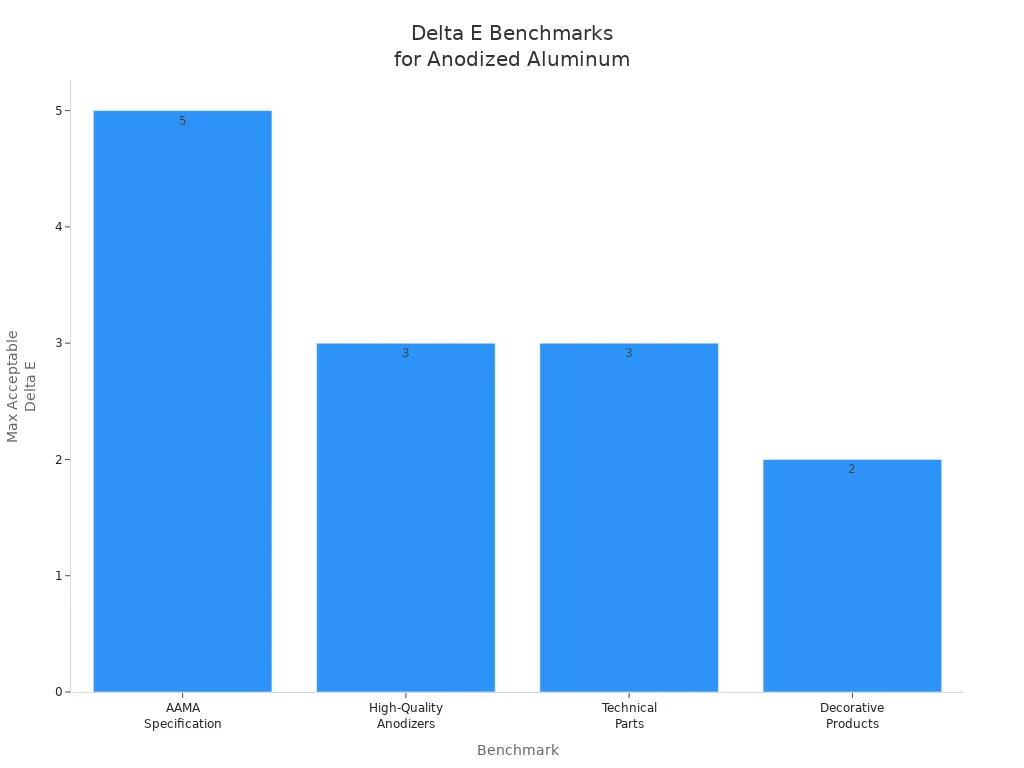
Bei dekorativen oder Markenartikeln sollte der ΔE-Wert maximal 2 betragen. Für technische Teile ist ein ΔE-Wert von 3 zulässig. Die American Architectural Manufacturers Association (AAMA) erlaubt einen ΔE-Wert von bis zu 5, gute Anodisierbetriebe streben jedoch Werte zwischen 1 und 3 an.
|
Benchmark |
Akzeptabler Delta-E-Bereich |
|---|---|
|
AAMA-Spezifikation |
≤ 5 |
|
Hochwertige Anodisieranlagen |
1 bis 3 |
|
Technische Teile |
≤ 3 |
|
Dekorative Produkte |
≤ 2 |
Sie sollten Ihren Lieferanten nach Prüfberichten fragen. Diese Berichte zeigen die Delta-E-Werte für jede Charge. Liegen die Werte unter 2, weist das Profil eine gute Anodisierung auf. Eine gleichmäßige Farbe sorgt für ein ansprechendes Aussehen und eine längere Lebensdauer Ihres Fensters.
Spektralphotometer helfen bei der Messung von Farbunterschieden. Beträgt der Delta-E-Wert 2 oder weniger, sehen die Farben für das menschliche Auge gleich aus.
Sie möchten, dass Ihre Fenster lange halten. Langlebigkeit ist bei der Auswahl ein sehr wichtiges Kriterium. korrosionsbeständige Fluorkohlenstoff-Aluminiumprofile Für Küstenregionen sind diese Profile besonders geeignet. Sie müssen Regen, Sonne und Umweltverschmutzung standhalten. Prüfen Sie, ob das Fensterprofil über eine robuste Oberflächenschicht verfügt. Diese Schicht verhindert Oxidation und erhält die Farbbrillanz. Salz in der Luft oder saurer Regen können schwache Profile beschädigen. Achten Sie auf Poren oder weiße Flecken auf der Oberfläche. Diese Anzeichen deuten darauf hin, dass das Profil nicht langlebig ist und seine Funktion nicht optimal erfüllt.
Hochwertige Fensterprofile zeichnen sich durch hohe Langlebigkeit und Leistungsfähigkeit aus. Sie behalten Form und Farbe auch bei schlechtem Wetter. Fragen Sie Ihren Lieferanten nach der Wasserdichtigkeit. Das bedeutet, dass das Fenster auch bei starkem Regen nicht durchlässt. Sie können sich auch nach den Wärmedämmeigenschaften erkundigen. Eine gute Wärmedämmung hält Ihr Zuhause im Winter warm und im Sommer kühl. Dies wird durch eine hohe Wärmeleistung und eine fachgerechte Abdichtung erreicht.
Tipp Fahren Sie mit der Hand über das Profil. Wenn es sich glatt und gleichmäßig anfühlt, zeugt das von hoher Qualität und Langlebigkeit.
Fragen Sie vor dem Kauf immer nach den Leistungsdatenblättern. Diese zeigen, wie sich das Fensterprofil in realen Tests bewährt. Sie finden darin Informationen zu Langlebigkeit, Wärmeleistung und Wärmedämmung. Die Datenblätter enthalten außerdem Angaben zur Witterungsbeständigkeit und Festigkeit.
Viele Lieferanten orientieren sich an internationalen Standards. Diese Standards helfen Ihnen, Haltbarkeit und Leistung zu vergleichen. Einige wichtige Standards sind:
AAMA-Spezifikationen für Fensterprofile
ASTM-Normen für Langlebigkeit und Leistung
ISO-Normen für Wärmeleistung und Dämmeigenschaften
Anhand dieser Normen können Sie prüfen, ob das Fensterprofil Ihren Anforderungen entspricht. Achten Sie auf die Leistungsbewertungen im Datenblatt. Hohe Bewertungen bedeuten eine längere Lebensdauer des Profils und einen besseren Schutz Ihres Hauses. Prüfen Sie außerdem die Wasserdichtigkeit und die Wärmedämmung. Diese Eigenschaften machen Ihr Fenster langlebiger und leistungsfähiger.
Notiz Bewahren Sie immer eine Kopie der Leistungsdatenblätter auf. Sie helfen Ihnen, Produkte zu vergleichen und das beste für Ihr Projekt auszuwählen.
Sie sollten vor dem Kauf von Fensterprofilen die entsprechenden Dokumente von Ihrem Lieferanten anfordern. Diese Dokumente belegen, dass die Profile den Qualitätsstandards entsprechen und helfen Ihnen, spätere Zusatzkosten zu vermeiden. Guang Ya Aluminium wird übersichtliche Aufzeichnungen für jedes Fensterprofil bereitstellen. Die folgende Tabelle listet wichtige Dokumente und Zertifizierungen auf, die Sie überprüfen sollten:
|
Dokumenttyp |
Zweck |
Ausgestellt von |
|---|---|---|
|
Werksprüfbericht (MTR) |
Bestätigt die Legierungszusammensetzung und -eigenschaften |
Hersteller |
|
Maßprüfungsbericht |
Überprüft Profilgröße und Toleranz |
Qualitätsabteilung |
|
Oberflächeninspektionsbericht |
Bestätigt die Oberflächenqualität |
Inspektionsteam |
|
Konformitätsbescheinigung |
Erklärt, dass das Produkt den Vertragsbedingungen entspricht. |
Hersteller |
|
ISO 9001 |
Qualitätsmanagementsystem |
Herstellung |
|
RoHS-Konformität |
Grenzwerte für gefährliche Stoffe |
Elektronik |
|
SGS-Inspektionsbericht |
Überprüfung durch Dritte |
Internationaler Handel |
Diese Dokumente belegen, dass die Profile den Qualitätsstandards entsprechen. Sie können einem Anbieter vertrauen, der diese Nachweise vorlegt. So vermeiden Sie unnötige Mehrkosten für minderwertige oder fehlende Unterlagen.
Ein guter Lieferant bietet Ihnen mehr als nur Fensterprofile. Sie erhalten Kundendienst und eine umfassende Garantie. Diese schützen Ihre Fenster und sparen Ihnen später Geld. Achten Sie auf folgende Merkmale eines guten Service:
Lange Garantiezeiten schützen Sie vor Mängeln und Schäden.
Gute Lieferanten verfügen über Teams, die Ihnen helfen. Sie beheben Probleme schnell und verwenden Originalteile.
Eine umfassende Garantie zeugt vom Vertrauen des Lieferanten in seine Fensterprofile. Dieses Vertrauen kann den Wert Ihrer Immobilie steigern und die Reparaturkosten senken.
Prüfen Sie immer die Garantiebedingungen. Guter Kundenservice bedeutet weniger Kosten für Fensterreparaturen und dass Sie bei Bedarf Hilfe erhalten.
Für Ihr Fensterprojekt benötigen Sie einen vertrauenswürdigen Lieferanten. Ein guter Ruf bedeutet höhere Qualität und weniger versteckte Kosten. Achten Sie beim Vergleich von Lieferanten auf folgende Punkte:
Qualität der Fensterprofile
Kundenrezensionen und Feedback
Branchenzertifizierungen, die Qualitätsstandards belegen
Hilfreicher Kundenservice
Ein guter Lieferant hält Liefertermine ein, beantwortet Ihre Fragen und bietet faire Preise. Sie können Geld sparen und Ärger vermeiden, indem Sie einen Lieferanten mit einem guten Ruf in der Fensterbranche wählen. Guang Ya Aluminium Industries Wir freuen uns, Sie in unserer Fabrik begrüßen zu dürfen.
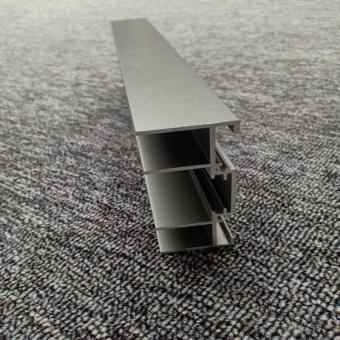
Beginnen Sie mit einer genauen Betrachtung jedes Fensterprofils. Führen Sie zunächst eine Sichtprüfung durch, um eventuelle Oberflächenmängel zu erkennen. Achten Sie auf Kratzer, Dellen oder Verfärbungen. Stellen Sie sicher, dass die Farbe über das gesamte Profil gleichmäßig ist. Achten Sie auf eine einheitliche Oberflächenbeschaffenheit. Abblätternde, blasenbildende oder ungleichmäßige Beschichtungen können die Lebensdauer des Profils beeinträchtigen. Vermeiden Sie Verformungen oder unregelmäßige Formen, da diese den Einbau des Fensters erschweren können. Tasten Sie mit den Händen nach rauen Stellen oder scharfen Kanten. Eine glatte Oberfläche zeugt von guter Qualität.
Achten Sie auf Kratzer, Dellen oder Flecken auf der Oberfläche.
Prüfen Sie, ob die Farbe bei allen Teilen übereinstimmt.
Auf Verformungen oder unregelmäßige Formen prüfen.
Fühlen Sie nach Rauheit oder scharfen Kanten.
Achten Sie auf Abblättern oder Blasenbildung an der Beschichtung.
Tipp Halten Sie das Profil gegen das Licht. Dadurch können Sie schwer erkennbare Mängel sehen.
Sie sollten vor dem Kauf von Fensterprofilen immer Muster anfordern. Anhand von Mustern können Sie das Produkt sehen und anfassen. So können Sie prüfen, ob das Profil zu Ihrem Fensterdesign passt. Bitten Sie den Lieferanten um Prüfberichte. Diese Berichte zeigen die mechanischen Eigenschaften wie Zugfestigkeit und Streckgrenze. Sie geben auch Auskunft darüber, ob das Profil den Branchenstandards entspricht. Die Auswertung dieser Berichte hilft Ihnen, die richtige Wahl für Ihre Fenster zu treffen.
Muster anfordern, um Passform und Verarbeitung zu prüfen.
Fordern Sie Qualitätsprüfungsberichte an.
Prüfen Sie die Testergebnisse hinsichtlich Zugfestigkeit und Haltbarkeit.
Stellen Sie sicher, dass die Berichte Ihren Anforderungen entsprechen.
Wenn Sie mit Lieferanten sprechen, stellen Sie Fragen zu deren Fensterprofilen. Erkundigen Sie sich, ob sie die Profile selbst herstellen oder mit vertrauenswürdigen Partnern zusammenarbeiten. Fragen Sie nach dem Zuschnitt- und Montageprozess. Prüfen Sie, ob sie über eine strenge Qualitätskontrolle und Chargenverfolgung verfügen. Stellen Sie sicher, dass sie Sonderanfertigungen für Ihr Fensterprojekt anbieten. Fragen Sie nach Garantiebedingungen und Kundendienst. Gute Lieferanten geben klare Antworten und helfen Ihnen bei der Auswahl der richtigen Fenster.
Erstellen Sie die Profile intern oder nutzen Sie vertrauenswürdige Partner?
Welche Schneide- und Montageverfahren verwenden Sie?
Wie überprüfen Sie die Qualität während der Produktion?
Können Sie Sondergrößen für mein Fenster anfertigen?
Welche Garantie und welchen Support bieten Sie an?
Welche Materialqualitäten und Oberflächenoptionen stehen zur Verfügung?
Haben Sie Erfahrung mit großen oder speziellen Fensterkonstruktionen?
Notiz Die Beantwortung dieser Fragen hilft Ihnen, einen Lieferanten zu finden, dem Qualität wichtig ist und der Ihr Fensterprojekt von Anfang bis Ende unterstützt.
Sie finden hochpräzise Fluorcarbon-Aluminiumprofile mit wenigen Handgriffen. Achten Sie zunächst auf saubere Schnitte und glatte Oberflächen. Fragen Sie den Lieferanten nach Leistungsdaten und Zertifizierungen. Gute Lieferanten helfen Ihnen bei der Auswahl der passenden Profile für Ihre Fenster. Achten Sie auf Qualitätsmerkmale – so profitieren Ihre Fenster von besserer Luft- und Wasserdichtheit, höherer Windlastbeständigkeit, besserer Wärme- und Schalldämmung, höherer Stabilität und langlebigerer Oberflächen. Diese Maßnahmen tragen zu einer längeren Lebensdauer und einem ansprechenden Erscheinungsbild Ihrer Fenster bei. Nutzen Sie diese Tipps, um die besten Profile für Ihr Fensterprojekt auszuwählen.
Die Luftdichtheit sorgt für ein angenehmes Raumklima durch Ihr Fenster.
Wasserdichtigkeit verhindert das Eindringen von Regen.
Die Windlastbeständigkeit schützt Ihr Fenster.
Wärmedämmung spart Energie.
Schalldämmung sorgt für mehr Ruhe.
Die strukturelle Festigkeit sorgt für die Stabilität Ihres Fensters.
Die Langlebigkeit der Oberflächenbehandlung sorgt dafür, dass Ihr Fenster wie neu aussieht.
Denken Sie daran: Sorgfältige Prüfung und die Auswahl eines zuverlässigen Lieferanten tragen wesentlich zum Erfolg Ihres Fensterprojekts bei.
Die Fluorcarbon-Beschichtung schützt Aluminiumprofile vor Rost und Ausbleichen. Sie macht die Oberfläche widerstandsfähig und schützt vor Witterungseinflüssen und UV-Strahlung. Dank dieser Beschichtung bleiben Fensterrahmen lange wie neu.
Achten Sie auf gerade Schnitte und glatte Oberflächen. Stellen Sie sicher, dass die Farbe überall einheitlich ist. Fordern Sie Datenblätter und Zertifikate an. Hochwertige Profile wirken robust und lassen sich lückenlos zusammenfügen.
Die Wandstärke macht Ihr Fenster stabiler und langlebiger. Achten Sie auf Profile mit einer Stärke von mindestens 1,4 mm. Dickere Wände schützen Fenster vor Verbiegen und Brechen.
Ja, Sie können fluorcarbonbeschichtete Aluminiumprofile in Küstennähe verwenden. Die Beschichtung schützt vor Salz und Feuchtigkeit. Ihre Fenster bleiben auch an stark beanspruchten Stellen stabil und rosten nicht.


 IPv6-Netzwerk unterstützt